
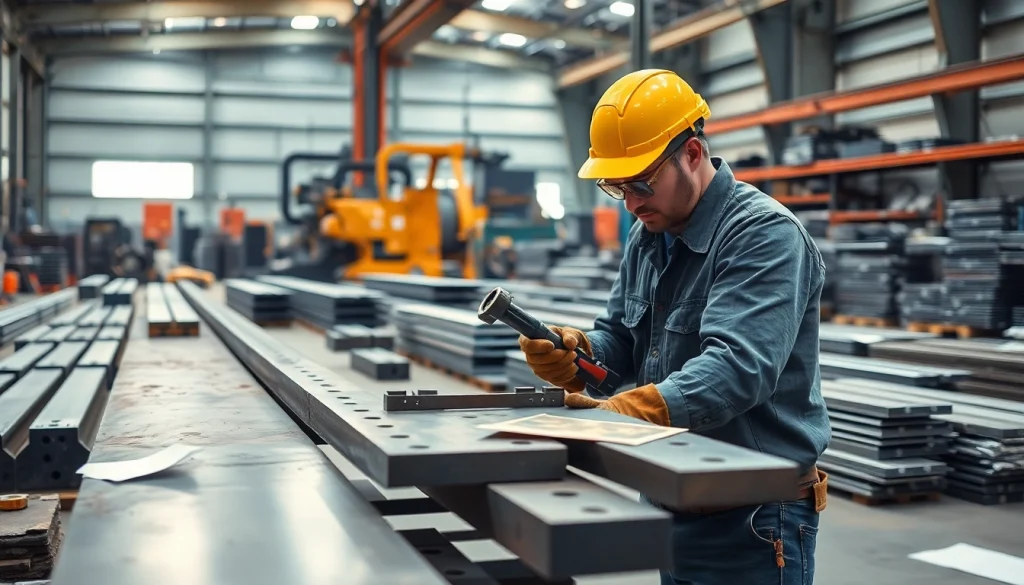
Understanding Custom Steel Fabrication
What is Custom Steel Fabrication?
Custom steel fabrication refers to the process of creating steel structures or components tailored to specific needs and requirements. This involves utilizing various fabrication techniques such as cutting, bending, welding, and assembling, to produce steel products that range from simple components to intricate structures. Custom fabrication is integral in various industries, including construction, manufacturing, and marine, owing to its versatility and adaptability. The ability to customize shapes, dimensions, and finishes ensures that these products meet precise engineering standards, enhance functionality, and align with design aesthetics.
Benefits of Custom Steel Fabrication
The primary advantages of opting for custom steel fabrication include:
- Tailored Solutions: Every project has unique specifications. Custom fabrication allows for designs tailored specifically to meet individual requirements, enhancing performance and satisfaction.
- Improved Quality: When materials are fabricated to order, the quality can be more tightly controlled, preventing defects that may arise from off-the-shelf alternatives.
- Innovation: Custom fabrication opens the door to innovative designs that can push the boundaries of conventional manufacturing, promoting creativity and new ideas.
- Cost-Effectiveness: Although the initial investment may seem higher, custom solutions can lead to long-term savings through energy efficiency, reduced material waste, and fewer design iterations.
- Shorter Lead Times: With experienced fabricators, project timelines can be minimized due to streamlined processes and direct communication with design and engineering teams.
Key Materials Used in Custom Steel Fabrication
Various materials can be utilized in custom steel fabrication, each bringing distinct advantages…
- Carbon Steel: Widely used due to its excellent strength-to-weight ratio and ease of fabrication.
- Stainless Steel: Known for its corrosion resistance, making it ideal for environments exposed to moisture or chemicals.
- Alloy Steel: Enhanced mechanical properties, suited for heavy-duty applications.
- Sheet Steel: Versatile in manufacturing thin, light-weight components.
The Custom Steel Fabrication Process
Initial Design and Planning Steps
Before commencing fabrication, initial design and planning are crucial. This phase involves detailed discussions to understand client requirements, including structural integrity, dimensional accuracy, and any aesthetic considerations.
Conceptual sketches are often created, progressing to 3D models that give a tangible sense of the final product. Software tools like CAD (Computer-Aided Design) are employed to visualize and simulate designs, allowing for modifications prior to production.
Equipment and Tools for Custom Steel Fabrication
Custom steel fabrication relies on advanced technology and equipment, including:
- Plasma Cutters: High-precision tools for cutting steel to the desired shape and size.
- Laser Cutters: Provide superior accuracy and edge finish, beneficial for intricate designs.
- Welding Machines: Essential for assembling components, available in methods like MIG, TIG, and Stick welding.
- Bending Machines: Used for creating curves and angles, essential in forming complex shapes.
Quality Assurance in Fabrication
Quality assurance is paramount in steel fabrication. Fabricators employ a series of inspections and tests during and after fabrication to ensure each component meets defined specifications…
- Visual Inspections: Checking for surface marks, weld quality, and overall aesthetics.
- Dimensional Checks: Using tools like calipers and gauges to ensure accuracy.
- Non-Destructive Testing: Methods such as ultrasonic or magnetic particle testing are employed to detect internal flaws without compromising the integrity of the material.
Applications of Custom Steel Fabrication
Steel Fabrication in Construction
In the construction sector, custom steel fabrication is crucial for producing structural components like beams, columns, and trusses. These elements are essential for building frameworks that can support considerable loads, ensuring safety and durability.
With the rise of modern architecture, aesthetic considerations have increased the demand for customized shapes and finishes, allowing steel to be integrated more creatively into designs.
Custom Steel Solutions for Industrial Uses
Beyond construction, industries such as aerospace, automotive, and energy sectors utilize custom steel fabrication for parts and machinery. For example, custom steel components are vital in manufacturing heavy machinery, automotive frames, and pipeline systems, which all necessitate high strength and reliability.
Moreover, advancements in technology have enabled the creation of sophisticated parts that integrate automation, enhancing efficiency and productivity in industrial processes.
Unique Fabrication Projects and Case Studies
Successful custom steel fabrication projects often highlight the potential for innovation. For instance, projects like custom sculptures or artistic installations demonstrate the versatility of steel while addressing aesthetic design…
Additionally, case studies showcasing the collaboration between fabricators and architects or engineers exemplify how custom solutions are developed to address unique challenges, leading to high-impact projects.
Selecting the Right Custom Steel Fabrication Partner
Evaluating Fabrication Companies
Choosing the right fabrication partner is vital for project success. Key factors to consider include the company’s experience, the range of services offered, and customer reviews.
Interviewing multiple fabricators to assess their facilities, workforce qualifications, and technology will help in making an informed decision.
Questions to Ask Potential Fabricators
Ensure you have comprehensive discussions with potential partners by asking pertinent questions such as:
- What is your experience in the specific type of project I’m undertaking?
- Can you provide references or case studies from previous clients?
- What processes do you have in place for quality assurance?
- How do you handle timelines and unexpected challenges during fabrication?
Assessing Past Projects and Capabilities
Reviewing past projects can provide insights into a fabricator’s capabilities and style. Look for diversity in their previous work, as this can indicate flexibility and creativity. Check for certifications that demonstrate compliance with industry standards and safety regulations.
Future Trends in Custom Steel Fabrication
Advancements in Technology and Tools
The custom steel fabrication industry is increasingly influenced by technological advancements that enhance efficiency, precision, and safety. Innovations such as automated machinery, robotic welding, and AI-driven simulation tools are reshaping how fabrication processes are executed.
Preparedness to adopt these technologies is crucial for businesses seeking to stay competitive and meet evolving client demands.
Sustainability Practices in Steel Fabrication
As the global focus shifts towards sustainability, the steel fabrication industry is also adapting. Practices such as recycling scrap steel, utilizing energy-efficient processes, and designing for disassembly are becoming common, contributing to a circular economy.
Fabricators embrace such practices not only to meet regulatory requirements but also to appeal to environmentally conscious clients.
Predictions for Market Growth and Opportunities
The future of custom steel fabrication looks promising, driven by demand in sectors like renewable energy, infrastructure development, and advanced manufacturing. The growth of smart cities and green building initiatives signals increasing opportunities for fabricators willing to innovate and adapt to new trends.
Stakeholders are encouraged to remain informed about market developments and innovations that could shape upcoming projects and partnerships.