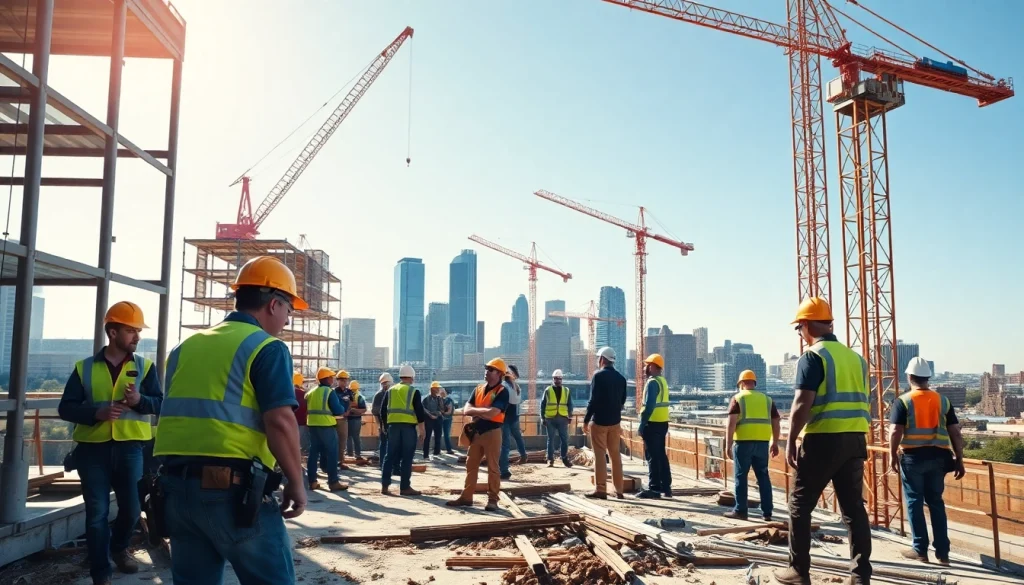
Understanding the Austin Construction Landscape
Austin, Texas, is experiencing a construction boom that reflects its rapid population growth and economic development. This vibrant city combines a rich cultural heritage with an innovative spirit, making it a hub for new infrastructure projects, residential buildings, and commercial enterprises. As a key player in the Texas construction sector, understanding the dynamics of Austin’s construction landscape is crucial for investors, builders, and stakeholders alike. This article delves into the historical growth, current trends, key industry players, and the various challenges facing the Austin construction market today, all of which are essential factors in shaping the future of Austin construction.
Historical Growth of Austin’s Construction Sector
The roots of Austin’s construction sector can be traced back to its establishment in the 1830s. Over the past century, the city has evolved from a modest settlement into a thriving metropolis. The construction industry in Austin began to gain momentum in the mid-20th century, primarily due to large-scale urban development projects. The influx of government agencies, educational institutions, and technology firms fueled a building boom that transformed the city’s skyline.
In the 1990s, Austin’s construction landscape witnessed a significant surge, driven by the tech bubble and an influx of young professionals seeking opportunities. Rapid urbanization led to considerable advancements in zoning laws and building regulations designed to accommodate the growing population. Notably, the establishment of the Austin Technology Incubator spurred the construction of office spaces and technological parks, further fueling growth. Today, with a population exceeding 1 million, plus a burgeoning economy, Austin’s construction sector continues to thrive.
Current Market Trends in Austin Construction
The current construction market in Austin is defined by several emerging trends that reflect broader economic and social shifts. First and foremost is the remarkable growth of diverse housing projects. With the city’s population expanding at an extraordinary rate, both single-family homes and multifamily units are being constructed to meet the demand. The rise in e-commerce has also led to increased investment in logistics and distribution centers, reshaping the commercial space.
Another trend is the focus on sustainable building practices. Developers are increasingly adopting green technologies to minimize the environmental impact of construction. This includes incorporating energy-efficient systems, utilizing sustainable materials, and adhering to stringent environmental regulations.
Key Players in the Austin Construction Industry
Understanding the key players in Austin’s construction industry provides insights into its operational dynamics. Major construction firms, local contractors, real estate developers, and architects contribute significantly to the market. Some of the notable players include Turner Construction, JE Dunn Construction, and DPR Construction, all of which are known for their robust portfolios and commitment to quality.
Local contractors also play a crucial role, offering specialized services that help to maintain the community-centric approach of many projects. Furthermore, the collaboration between these players often results in innovative solutions to common construction challenges, fostering a competitive yet cooperative environment.
Challenges Facing Austin Construction Projects
Regulatory Hurdles Impacting Construction
Despite thriving conditions, the Austin construction industry faces numerous challenges, one of the most significant being regulatory hurdles. The city is known for its strict zoning laws and permitting processes, which can delay project timelines and escalate costs. Builders must navigate a complex web of regulations concerning land use, environmental impact, and historical preservation.
Moreover, stakeholders are often confronted with a lack of transparency in the permitting process, leading to frustrations and inefficiencies. Developers looking to understand the nuances of compliance must invest time and resources in legal consultations, resulting in longer project durations and potential financial strain.
Labor Shortages in the Austin Construction Market
Labor shortages represent a critical challenge for the construction industry in Austin. As the economy grows, so does the demand for skilled labor. However, there is an increasing gap between the availability of qualified workers and the needs of the industry. Factors contributing to this labor shortage include an aging workforce, the departure of workers during economic downturns, and insufficient training programs for new entrants to the field.
This labor shortage may result in project delays, increased labor costs, and compromised safety standards. Addressing this challenge requires community engagement, investment in vocational training programs, and collaboration between local educational institutions and construction firms to ensure a steady pipeline of skilled labor.
Environmental Considerations for Builders
Environmental concerns form another layer of challenges facing Austin’s construction projects. The increased focus on sustainability has led to heightened scrutiny regarding the environmental impact of new developments. Builders are now expected to consider the ecological ramifications of their projects, including habitat disruption, water usage, and waste management.
Additionally, Austin’s city planners are actively enforcing environmental regulations that promote sustainable practices in construction. As such, developers must be proactive in integrating green technologies and materials into their designs while remaining compliant with local ordinances aimed at safeguarding natural resources.
Innovative Technologies in Austin Construction
Building Information Modeling (BIM) Applications
As technology evolves, so does the construction industry. One of the transformative technologies making waves in Austin is Building Information Modeling (BIM). BIM software allows construction teams to create detailed digital models of projects, incorporating structural, mechanical, electrical, and plumbing systems. This transparency enables more efficient planning, accurate cost estimates, and proactive issue resolution during the project lifecycle.
In Austin, several projects have leveraged BIM to streamline workflows. For instance, teams can visualize complex designs in a digitally simulated environment, improving communication between architects and contractors. As more firms adopt these innovations, we can expect a significant increase in project efficiency and a decrease in errors.
Green Construction Technologies on the Rise
The movement toward sustainable construction is gaining momentum with the adoption of green technologies. In Austin, developers are implementing eco-friendly practices that not only adhere to regulations but also pride themselves on community responsibility and sustainability. This includes utilizing renewable energy sources, efficient water management systems, and environmentally friendly materials.
Technologies such as solar energy panels, energy-efficient HVAC systems, and greywater recycling solutions are becoming increasingly common in new developments. As public awareness of environmental issues grows, projects that incorporate these green technologies are likely to see heightened interest from buyers and investors alike.
Use of Drones for Site Surveys and Inspections
Drones have emerged as vital tools for during site surveys and inspections. By providing aerial perspectives, drones facilitate accurate mapping and surveying of construction sites, leading to enhanced precision and reduced risks. Construction managers in Austin are utilizing drone technology to conduct real-time data collection, monitor site progress, and evaluate safety conditions.
The benefits of using drones extend to reducing the time needed for inspections and minimizing costs associated with labor and equipment. By integrating drones into standard practices, firms can capitalize on efficiencies that result not only in time savings but also in improved project outcomes.
Best Practices for Successful Construction Management
Effective Project Planning and Scheduling
Successful construction management hinges on effective project planning and scheduling. Establishing a detailed timeline that accounts for each phase of construction—from pre-construction tasks to closing out projects—is vital to achieving goals on time and within budget. Utilizing project management tools can streamline scheduling, allowing managers to allocate resources efficiently and adapt to unexpected changes.
Moreover, regular progress monitoring against the schedule is essential to identify potential delays early on. By employing these best practices, project managers can mitigate risks, foster accountability, and enhance overall project efficiency.
Collaborative Approaches to Team Management
A collaborative approach is crucial for successful construction management in Austin. Ensuring that all team members, from design teams to contractors, work cohesively contributes to better communication and decision-making. Regular meetings to discuss objectives, address concerns, and provide feedback can foster a culture of collaboration that ultimately leads to successful project outcomes.
Additionally, utilizing collaborative technologies, such as project hubs and communication platforms, can facilitate information sharing and teamwork, leading to improved project cohesion and satisfaction among stakeholders.
Budgeting and Financial Management Strategies
Financial management is a critical component of construction management, requiring meticulous budgeting and forecasting. Construction managers must develop realistic and detailed budgets that consider resources, labor, materials, and contingencies. Regular financial reviews and updates can help to control costs and avoid budget overruns.
Using financial management software can enhance transparency and facilitate accurate forecasting, while educating project stakeholders about budget constraints can help to uphold discipline in spending. Overall, sound financial management practices can be the differentiator between a project’s success and failure.
The Future of Construction in Austin
Predictions for Austin’s Urban Development
The future of Austin’s urban development is poised for exciting transformations. As the city continues to grow, we can expect an increased focus on vertical integration, with more high-rise buildings accommodating mixed-use developments that combine residential, commercial, and recreational spaces. This approach promotes efficient land use and fosters vibrant communities.
Moreover, with ongoing investments in infrastructure, such as transportation and public services, Austin will continue to evolve as a well-connected, dynamic city that attracts new businesses and residents alike. Stakeholders can anticipate that these developments will ultimately enhance the quality of life for all Austinites.
Emerging Trends in Sustainable Building Practices
The shift toward sustainability is not a fleeting movement but a foundational aspect of the future of construction in Austin. Emerging trends indicate that a focus on circular economy practices, which prioritize recycling and repurposing materials, will become prevalent in the industry. This approach drastically reduces waste generation and promotes sustainable practices throughout the construction lifecycle.
Additionally, the implementation of green building certifications, such as LEED (Leadership in Energy and Environmental Design), will gain traction, driving developers toward more environmentally-friendly methods and materials. The community’s growing awareness and demand for sustainable living will further catalyze these practices.
Preparing for the Evolving Construction Market
As the construction market in Austin evolves, stakeholders must adopt proactive strategies to remain competitive and resilient. Embracing continuous learning through training and adaptation, developers can keep pace with technological advancements and market trends. Staying informed about regulatory changes and actively participating in community discussions surrounding development will ensure alignment with local needs and preferences.
Additionally, having contingency plans in place can safeguard against unforeseen challenges, such as economic fluctuations or supply chain disruptions. By adopting adaptable strategies and cultivating collaboration, stakeholders can not only navigate but flourish in the ever-changing landscape of Austin construction.